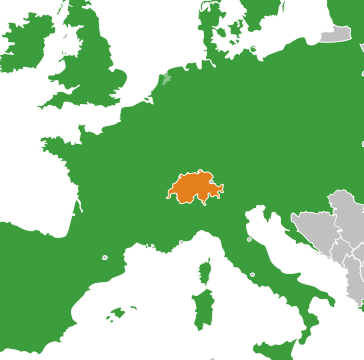
Come for the chocolate, stay for the xenophobia

Every time the Rovian Swiss People’s Party (often described as “extreme right” in the English-speaking press, though they’re really more nativist than explicitly fascist) manages to ram one of its populist cries for attention through the initiative process, I wonder why I, as a foreigner, insist on staying in a country so intent on doing silly and dangerous things to its constitution in service of its hate of us. Over time, Switzerland feels less and less welcoming. But self-deportation is exactly what they want me to do, a fact that strengthens my resolve to stay here long enough to become the aged burden to the social-insurance scheme the political discussion here assumes that I am. ...

February 9, 2014 · 4 min · brian

An American Postbank

Over the past couple of days, this article has been brought to my attention from multiple angles. The basic idea — that the US Postal Service’s collapse and the problem of banking deserts in America’s poorer and more rural neighborhoods are two problems with a single solution — is an intriguing one. As an American emigrant customer of the Swiss post bank, it seems like a good idea, but I’m not sure the history of American and European financial services are similar enough to allow us to predict the success of the former from the latter. ...

January 31, 2014 · 6 min · brian

2013 in Review

It’s a good thing that keeping the blog up to date wasn’t actually a resolution of mine for last year, because I did as well as, well, one usually does with one’s New Years’ resolutions. So here’s all the stuff I didn’t post last year. ...

January 2, 2014 · 4 min · brian

Is Traffic Traffic?

One can debate the usefulness of the traffic-traffic metaphor in network engineering. On the one hand, speed limits make a nice illustration of fairness in the network neutrality debate. On the other hand, motorway congestion and the effect of queueing in network congestion control look nothing like each other, at least until we develop motorways that change their length during rush hour, and we decide we’re okay with cars that take too long to get to their destinations being crushed and disposed of en route. One must carefully consider how well the metaphor fits reality before using it to explain or reason about anything important. ...

December 19, 2013 · 1 min · brian

A Media Policy for the 17th Century

I’ve been reading Tom Standage’s “Writing on the Wall” of late, which I can heartily recommend. It’s less subtle than “The Victorian Internet”, which counts among my favorite books of all time, but that was written before Twitter, and Twitter’s made us all less subtle, I think. What strikes me about his new book is not his thesis — that the “social media revolution” is nothing really new, just the application of new technology to our apparently instinctive love of gossip — but how well it illustrates that much of the present public policy debate over new media technology is very, very old. ...

December 11, 2013 · 5 min · brian

From France to Austria

The weather’s finally cold enough that there’s time to pour a cup of glühwein, put the feet up by the fire, and finish blog posts about all the being outside this summer that got in the way of posting stuff about being outside on the blog. So. My first piece of advice to anyone seeking to cross their home country on muscle power alone: move someplace tiny with a complicated border. Like Switzerland. ...

December 9, 2013 · 8 min · brian

QoF 0.9.0 (“Albula”) released

The QoF TCP-performance-aware IPFIX flow meter I’ve been working on, on and off, for about a year, now seems to produce halfway plausible results and hardly crashes at all anymore, which means it’s time to follow the path of real artists immemorial and ship it already: see here, or if you’re really serious about it, just track master on github. ...

November 4, 2013 · 1 min · brian

The Impeachment of Barack Obama

Bear with me here for a minute, and this rant will get to the point. I was trying to explain the government shutdown to an Italian friend of mine last night (“so have you fixed the Silvio problem yet?” was my first-pass attempt to not talk about US politics before getting drunk enough to keep it from depressing me; I failed). I’ve come to realize that a successful overturn of the ACA by the petulant child wing of the Republican party would be an act of illegitimacy on the order of the appointment of George W. Bush as president by the Supreme Court in 2000. ...

October 3, 2013 · 5 min · brian

Active Resistance against Passive Surveillance

So I complain about a lull in the news about the more-or-less complete compromise of the Internet by the National Security Agency et al, and then this goes and happens. One of my old standard interview questions for people applying for jobs with some responsibility for information security was “are you paranoid”? When the lighting was good, and my eyes bugged out just right, this could be a little scary. It’s time to retire this question, I think, because the answer would seem to be “no, I am clearly not paranoid enough”, unless the applicant shows up to the interview in a tin-foil hat. ...

September 6, 2013 · 4 min · brian

The Freedom Panopticon

This is the fourth post I’ve started on the pervasive, indiscriminate, uncontrolled surveillance of electronic communications by the ministries of state security of the North Atlantic world. I stopped writing each of the last three either because the rant got too paranoid, or further revelations showed that the rant was not yet too paranoid enough. But the stream of new information seems to have dried up a bit, as the news cycle has distracted itself with something called a Miley Cyrus, whatever that is, so I’ve had a chance to catch up a bit. And as a researcher in network measurement who left a job funded by security-academic-industrial-complex money to move to Europe to work on a project seeking to apply technical privacy guarantees to network monitoring systems (which ironically was named PRISM, and which I must forevermore footnote on my CV as “no, not that PRISM”), I feel I should make some statement on all of this. So here it is, predictable and unoriginal though it may be: Pervasive surveillance is anathema to a functioning democratic society, and nations which do not exercise effective civilian oversight of their state security apparati end up being controlled by them. ...

August 29, 2013 · 6 min · brian