Down the Rabbit Hole, Part One

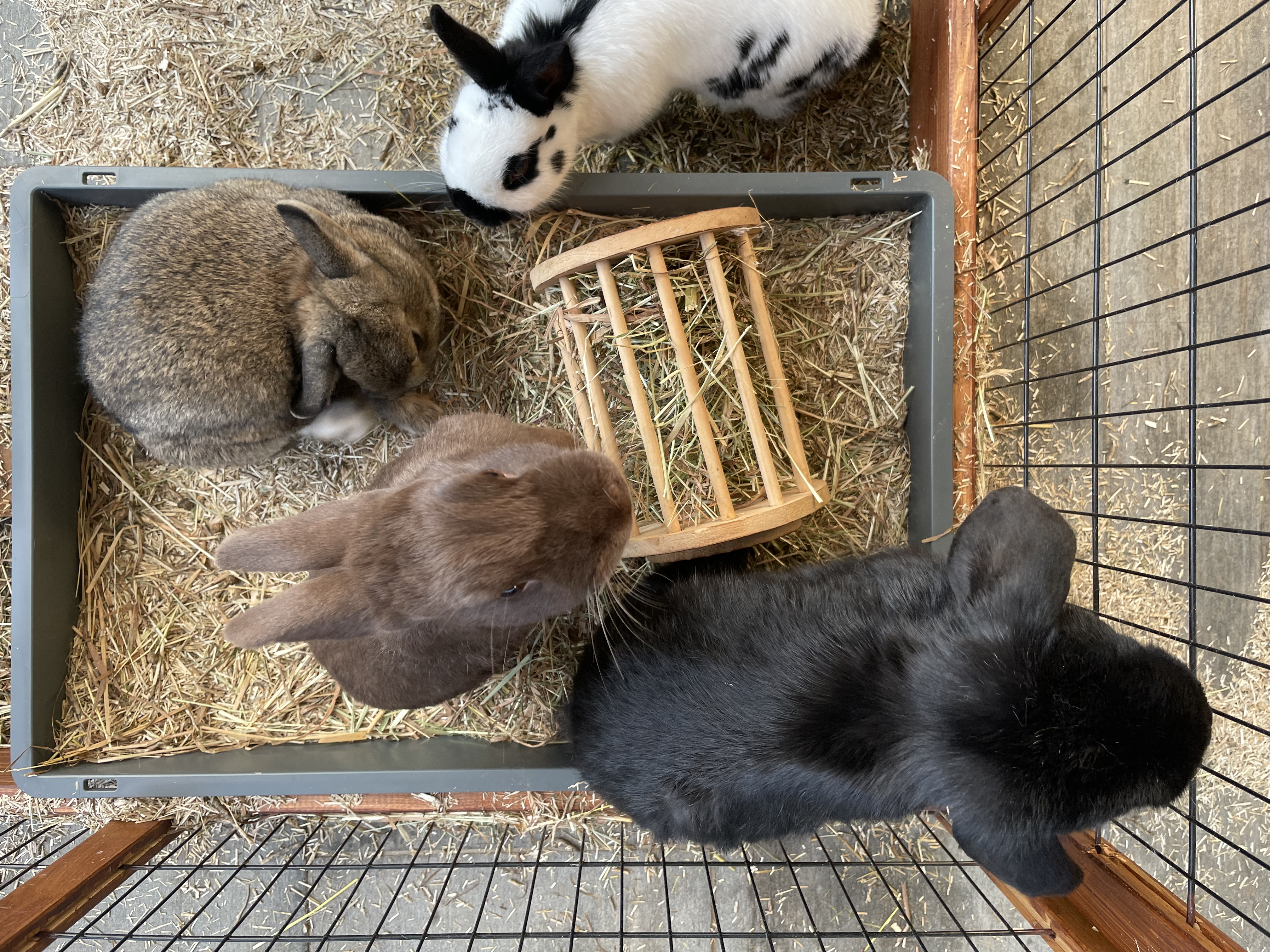
That people “disappear” into Google after joining (especially from academia) is a complaint so often told that it’s nearly a cliche… says the Googler whose last blog post, about joining Google, was over two and a half years ago. I didn’t just go down the rabbit hole of compute infrastructure at Google in the intervening quarter-decade. I also picked up a synth or six, and, as a bonus, some actual rabbits. ...

December 19, 2021 · 5 min · Brian Trammell

Noogling

A couple of months ago, I posted about leaving academia. Two weeks ago, I joined Google as a Site Reliability Engineering (SRE) manager. I’ll be working to keep bits of Google’s technical infrastructure running smoothly, at least once I’ve learned enough about how it works and what all the various switches and levers do to be dangerous. The past two weeks have been a deluge of new things to learn, but I’ve finally got my head far enough above water to reflect on things a bit. ...

March 17, 2019 · 3 min · Brian Trammell

Hitting DNS with a Sledgehammer (for Fun and Profit)

About three years ago I started working part-time (20%) on SCION, a secure, available future Internet architecture. Since I wasn’t around much, I was given a nice easy project that wasn’t on anyone’s critical path: desigining the naming system for SCION (as to that time it was assumed SCION would just use DNS with new RRTYPEs to handle the new address families it introduces). ...

January 28, 2019 · 3 min · Brian Trammell

m11y and o11y

Looking back over the arc of my career in pseudoacademia, especially over the last three years of digging into transport stack evolution with the MAMI project, there are a few bits of work I’m especially happy to have been a part of. One of these is the inclusion of the spin bit into the QUIC transport protocol. The spin bit was conceived as the minimum useful explicit signal one could add to a transport protocol to improve measurability, the benefit for the overhead is IMO quite worth it. Though it exposes “just” RTT, latency (together with data rate, which is available simply by counting packets and bytes on the wire in any transport protocol that is not hardened against traffic analysis to the point of uselessness) is the most important metric for understanding transport layer performance diagnosing all matter of transport-relevant network problems, and the spin signal itself can also be observed to infer loss and other issues with network treatment of a packet stream. The definition and deployment of the spin bit will therefore make network protocols more measurable while preserving privacy gains from encryption, and is a clear win for network operations and management. ...

January 25, 2019 · 5 min · Brian Trammell

On the Security Ratchet

The IETF uses Jabber for instant messaging during working group meetings, as does the IAB for its own teleconferences and meetings. Since I didn’t really feel like shopping around for a Jabber account, and XMPP integration with Google Talk shut down in the middle of the decade, I decided a few years ago to run my own server, which I pretty much only use for connecting to IETF conference rooms and for chatting with IETF folks as a backchannel during meetings. Prosody is a pretty nice piece of software, so after a little work to get it up and running (IIRC, most of this was getting used to the fact that the configuration files are written in Lua) it’s basically stayed up flawlessly since then. ...

January 15, 2019 · 3 min · Brian Trammell

Leaving Academia

I always love going to Schloss Dagstuhl, a retreat for computer scientists in the middle of nowhere in Saarland, Germany. It’s a little difficult to get to, but the train ride (Wallisellen to Saarbrücken via Zürich and Mannheim) is a nice, slow way to step back from whatever context-switching overhead is dominating my days at the moment and start thinking about the theme of the workshop. ...

January 9, 2019 · 4 min · Brian Trammell

Just say no to Swexit

A year and some after Switzerland’s plucky protofascist poster art collective cum Trumpist political party, the SVP (Swiss People’s Party), screamed Verfassungsbruch! (lit. “Constitution break!”; fig., accusative: “you’re breaking the Constitution!”) on the floor of Parliament at the admitted non-implementation of their unimplementable vandalism of the Swiss constitution in the name of nativism, they’re back at it again with the almost-reasonable-sounding Selbstbestimmungsinitiative (lit. “self-determination initiative”; SBI if you’re into hashtags). One has to read the details to see how broken it is. Let’s have a look. ...

October 24, 2018 · 6 min · Brian Trammell

And yet, it spins

I’m writing today from Berlin, after an excellent Passive and Active Measurement conference and a very long but fruitful week in London for IETF 101, which, for me, came to be dominated by the The Spin Bit. The spin bit is an explicit signal for passive measurability of round-trip time, currently possible in TCP but not in QUIC due to lack of acknowlegment and timestamp information in the clear. It’s an example of a facility designed to fulfill the principles for measurement as a first class function of the network stack we laid out in an article published last year. I won’t go into the details of how it works or why it matters here; read the draft or watch the presentation for that. ...

March 29, 2018 · 5 min · Brian Trammell

A little optimism about Swiss politics

I don’t think I’ve ever written a completely optimisic post about politics, but today seems as good a day as any to try. Today was an Abstimmungssonntag (“referendum Sunday”) here, and the most important question before Switzerland at the national level was a revocation of the federal government’s authority to levy a compulsory television and radio fee: NoBillag. I’ve already written about this referendum, and how it represented not a mere return of four hundred francs per year to every household, not a mere privatization of a few television and radio stations (one of which I’m listening to right now), but a frontal assault on public media and an attempt to drive the country’s media landscape into low-information territory; in other words noch ein Schritt zum kriechenden Beitritt der Schweiz in die vereinigten Staaten(1). ...

March 4, 2018 · 6 min · Brian Trammell

On Billag

My opinion on Billag(1) is complicated. It seems like it could fairly simply be replaced by payments from the general fund, overseen by a non-political body to evaluate applications for funding from SRF and regional providers. What we have in NoBillag, instead, is an attempt to Americanize the Swiss media landscape. Thankfully, I’m not the first to point this out, and I hope I won’t be the last. tl;dr, hey Switzerland, you want Bundesrat Trump? Because NoBillag is how you get Bundesrat Trump. ...

January 17, 2018 · 5 min · Brian Trammell